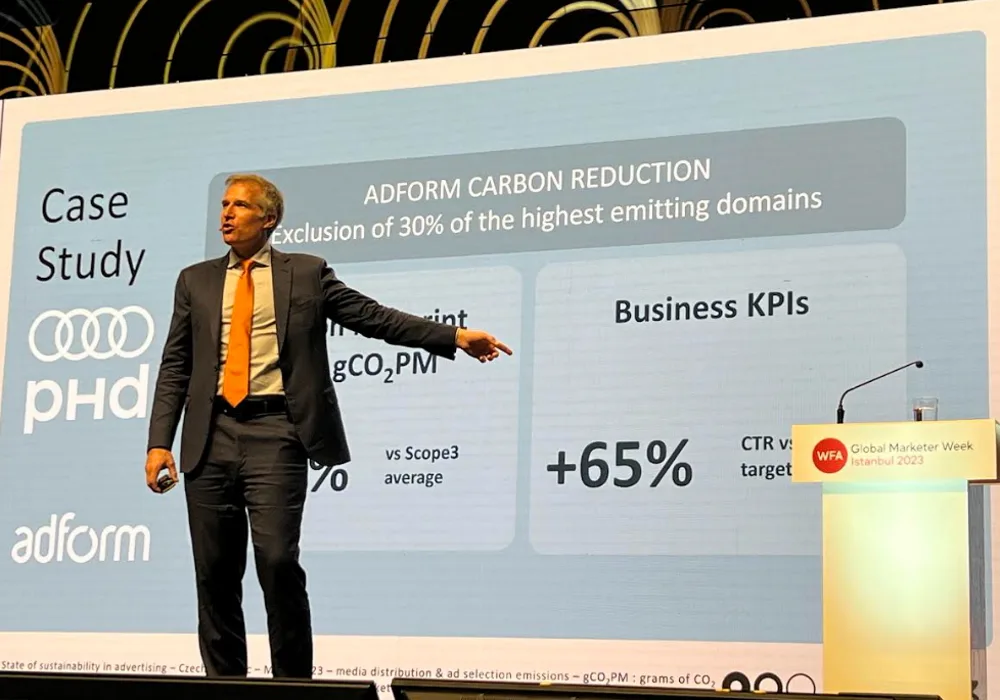
Brian O’Kelley takes more meetings in a week than most CEOs take in a month. When my friend Jessica Hoffman from Craft Ventures introduced us in December 2022, I had no idea what I was signing up for.
Scope3 was brand new. The only people at the company were the founding team. Brian and I would be working elbow to elbow to introduce the company and its visison to the world. I hadn’t worked in adtech in years, and we’d never met. But we shared a passion for new ideas and storytelling, so we took a chance.
Within the first week, I understood why Brian had built one of the biggest platforms in digital advertising. He meets with everyone. Investors, customers, competitors, academics, journalists, random people with interesting ideas. He tests hypotheses. Gets feedback. Sells. Recruits. Evangelizes. The pace is relentless.
The byproduct of all these meetings was Notion meeting notes. Thorough breakdowns of every conversation. His reflections on the discussion. New ideas. New business opportunities. Follow-up items. Story angles. Marketing hooks. For every single person he met with.
Brian has this ability to remember things like pieces of a giant puzzle and bit by bit, make them fit together. He calls it his L2 cache. For a new company that was just getting started and they were gold.
Each day there were 5 to 10 new notes to read, digest, and make sense of.
I kept thinking about something Brian wrote years ago about building Right Media. He realized the real goal was to build his sales director Mike’s natural intelligence into software that could figure out which ad to run on which site in real-time. He was going to build a software version of Mike’s brain. That simple idea led to the $100B programmatic advertising industry.
What if I had software that could help me synthesize what was in Brian’s notes? Better yet, what was in Brian’s brain?
That question became North TK.
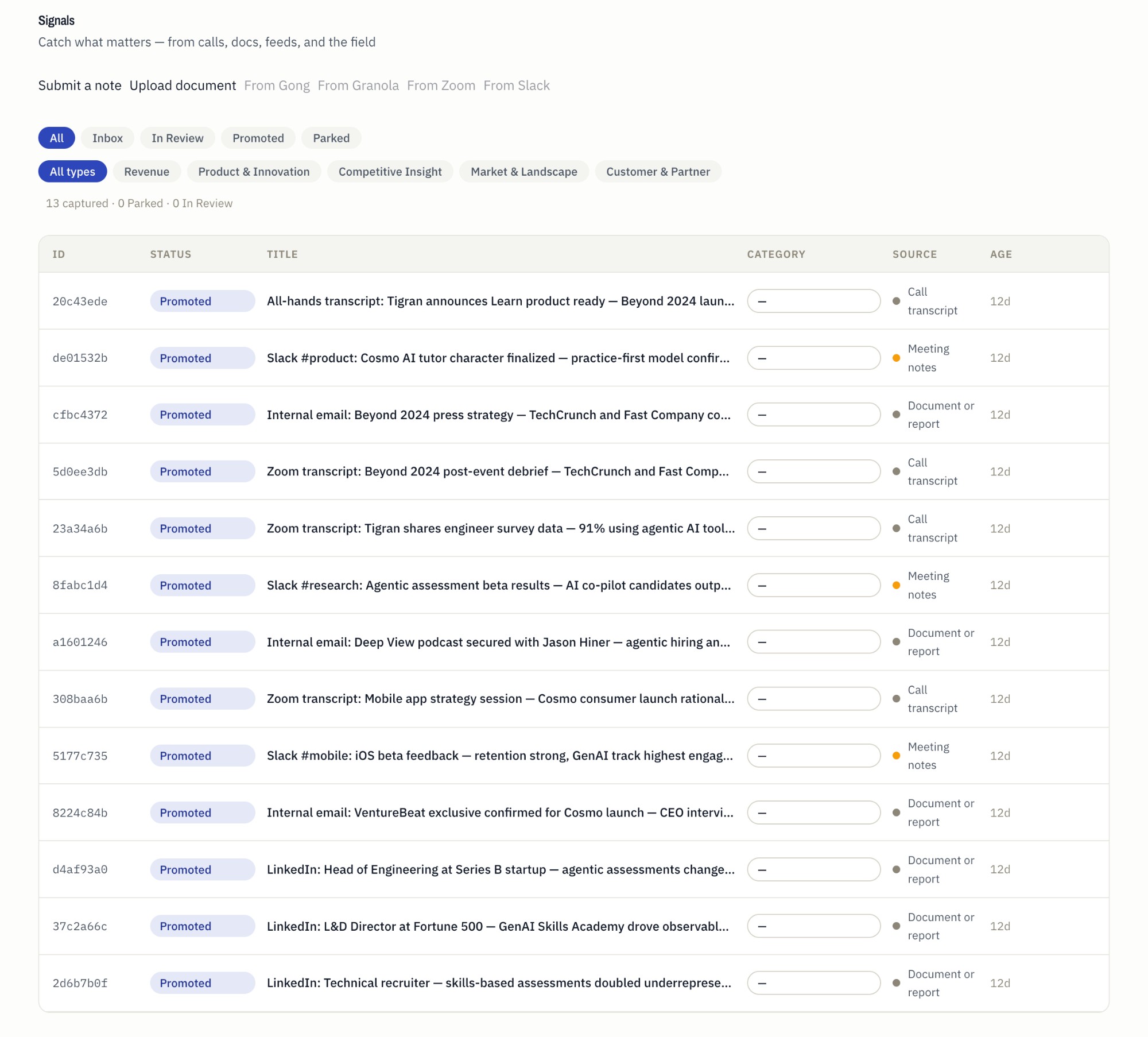
The pattern repeats everywhere
We’ve spent the past two years building this platform. One of the biggest things we’ve found: every company operates differently when it comes to how information is gathered and how insights are captured to inform marketing programs and campaigns. But the common thread is that all technology companies are information rich and most marketing organizations are insights poor.
The more companies rely on a small team to remember or capture important information about product, customers, and growth, the less likely this information makes it into marketing campaigns.
Customer insights, competitive intelligence, product developments, strategic information from sales calls, internal meetings, events, board discussions, ad-hoc conversations. Either nobody captures it, or someone captures it and there’s no mechanism to surface, organize, or systematize that information into actionable marketing strategy, content, and campaigns.
By the time the communications or marketing team needs a proof point, a customer quote, a press release hook, or a campaign idea, the moment is gone. The signal existed. Nobody built a system to catch it.
The result: campaigns built on incomplete intelligence, content that doesn’t reflect what sales is actually hearing, and stories that never get told because nobody had time to find them.
Marketing and communications teams get asked to create campaigns via creative alchemy. Take whatever scraps you can find and make magic happen. We were convinced every company had this problem and that there had to be a better way.
We’re rolling out North TK with clients now. If your marketing team is spending more time hunting for intelligence than using it, we should talk.